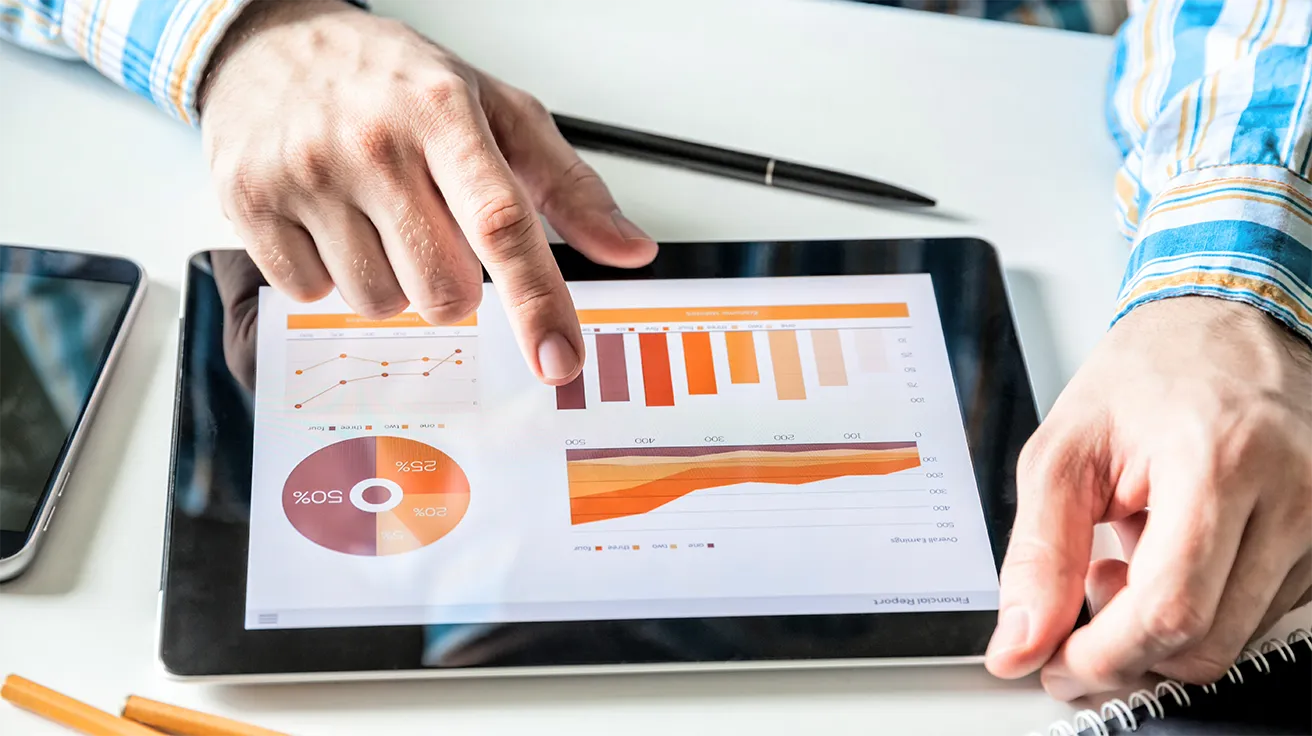
Big Data in market research has revolutionized the way businesses know customers, studying markets, and making strategic decisions. So, in this information age, with competition established apparently only in capturing, analyzing, or interpreting huge volumes of data, is it really an edge? From bringing out a new product to marketing it in a new geography or to developing a better understanding of the target audience, Data could open the doors to answers.
In today’s fast-evolving markets, traditional research procedures are not sufficient any longer. Business managers and marketing strategists need timely, accurate, and scalable insights. That is when Big Data steps in to inform wiser, data-driven choices.
A Better Insight into Big Data in Market Research
The term Big Data in market research indicates huge volumes of structured as well as unstructured data, which organizations process to derive meaningful insights. Such data are available through various channels: social media websites, search engines, e-commerce portals, customer feedback, IoT sensors, etc.
Prior to Big Data, conventional market research relied on small surveys and interviews, but now companies are able to analyze customer behavior in real-time from global markets. It is not only more accurate, but it is also cheaper and faster and does not include the human factor of error.
For example, businesses can instead analyze millions of points of web traffic in real time, purchasing history, or social interaction rather than asking 1,000 people about an innovative new product idea.
How Big Data Enhances Data Driven Decision Making
For example, let’s say you are a business owner and are considering entering a new market, or changing your pricing policy. Previously this could have meant commissioning an expensive survey. Big Data in market research today allows data driven decision making to be quicker and more accurate.
Here’s why:
Trend Analysis: Tracking what other people do online allows you to spot trends before everyone else.
Customer Segmentation: You are able to segment your customers on the basis of purchases, preference, and demographics through data.
Predictive Analytics: You use past data to predict customer behavior in the future, ahead of the curve.
Real-Time Feedback: Real-time feedback allows you to respond instantly to shifts in the marketplace or product feedback.
All the above instruments make it possible for business owners to make decisions based on facts rather than intuitive decisions.
Role of Big Data in a Market Analysis
Big Data in market research is like switching on a floodlight in a black room. It shines 360 degrees about your industry surroundings, rivals, buyer sections, and perils.
Whether you are launching a new startup or expanding a business, with Big Data entering the market research scenario, you are able to identify opportunities and openings that you would otherwise remain blind to.
Big Data allows market consultancies to track consumer sentiment, buying habits, competitor actions, and economic patterns—all the information that goes into a winning market report.
Big Data and Market Research Companies
Market research companies with high growth are no longer employing qualitative interviews or small sample sizes. Rather, they are embracing Big Data technologies like AI, machine learning, and data visualization tools to deliver more in-depth real-time analysis.
In case you are working with market research companies in Dubai, say, you would discover a huge emphasis on data-driven tactics offering a complete picture of your target segment. Market research companies make use of Big Data in market research to learn and analyze social trends, purchase behavior, and market requirements specific to the UAE and internationally.
These companies combine human intelligence with sophisticated analytics to deliver results that are firmly sustainable to enable data driven decision making.
Benefits of Using Big Data for Market Research
Let us demystify the process by which Big Data delivers enhanced market research findings:
1.Greater Accuracy: Reduces human bias and intervention through the utilization of hard facts instead of opinions.
2.Real-Time Insights: No longer be kept in the dark for weeks waiting to hear about survey results—data is processed as soon as it’s collected.
3.Global Reach: Reveal insights from millions of data points, not hundreds of survey responses.
4.Cost Efficiency: Minimizes the cost of traditional field surveys by tapping into digital sources.
5.Actionable Intelligence: Provides actionable intelligence to inform product development, marketing campaigns, and strategy.
Big Data is one of the valuable tools or resources that modern market research companies can use to succeed.
How Business Owners Can Adopt Big Data
If you are an entrepreneur eager to make better-informed decisions, here are a few simple ways in which you can implement Big Data within your business:
- Collaborate with a digital analytics expert research agency.
- Use web-based survey tools that incorporate social listening and AI.
- Implement data dashboards and customer tracking into your marketing mix.
- Focus on KPIs from actual time behavior rather than just past trends.
By using data driven decision making, you’re setting your business up for long term success.
Why Feasibility Studies Should Include Big Data
A feasibility study tells you whether or not a business concept or project will succeed. Without real-time perspective, however, you might be responding to stale data. Blending Big Data in market research with a feasibility study enables you to:
- Research competitors in real time
- Poll actual market demand
- Make more precise estimates of potential pitfalls
Marketing consultancies that use Big Data in feasibility studies provide an added layer of deeper insight that is essential to long-term success.
Conclusion: Designing the Marketing and Business Tomorrow
With digitalization racing ahead, Big Data’s role in generating smarter strategies will continue to go even higher. For UAE entrepreneurs, data tool investments and collaborations with path-breaking market research firms are not a choice—but the doorway to the future of success.
Whether it’s for new products, new markets, or simply to get to know your customers better, Big Data in market research provides visibility and accuracy to remain ahead in competitive markets.
 Demos
Demos  Docs
Docs  Support