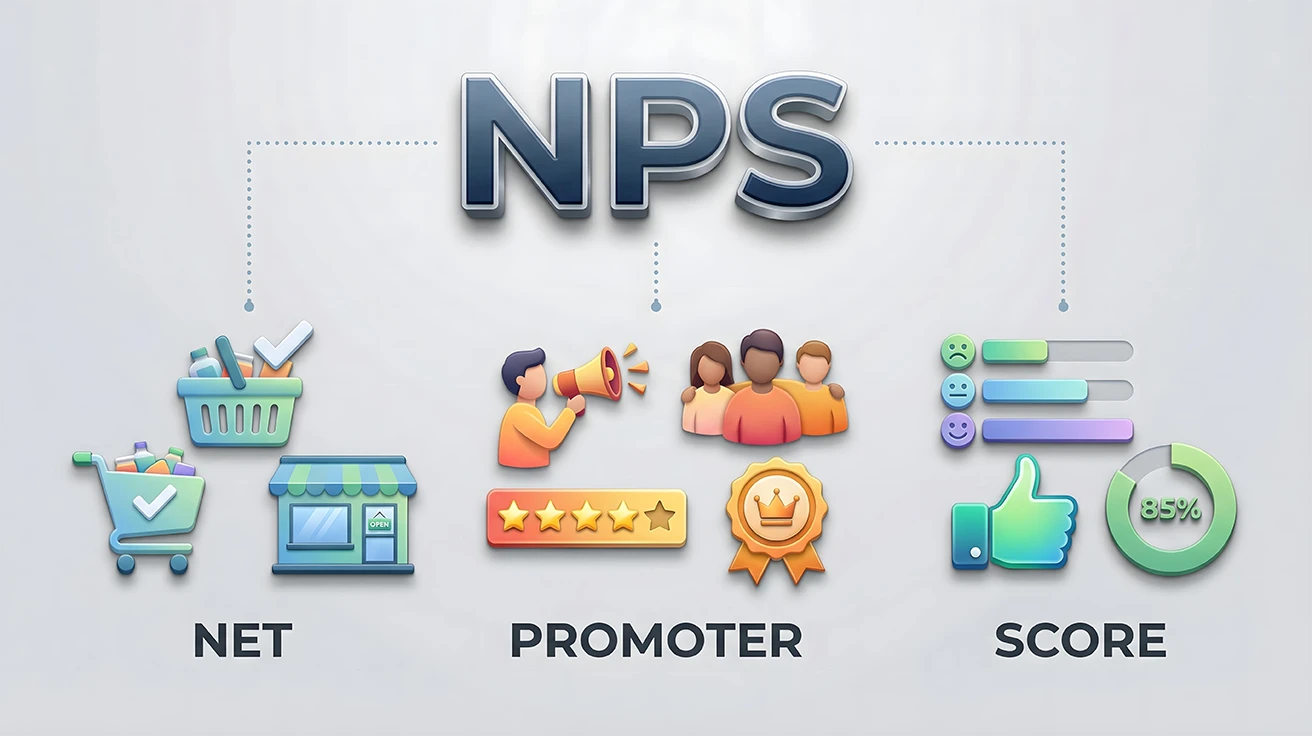
How NPS Survey Companies in UAE Are Changing the Way Businesses Measure Customer Loyalty
NPS survey companies in UAE are getting more calls than ever before. And it is not just from the usual suspects like banks and telecom providers. Hospitals, logistics companies, real estate developers, retail chains, and even government-facing service businesses are now actively looking for structured ways to understand how their customers actually feel.
Something shifted. Businesses that used to track success purely through revenue and retention numbers started realising those metrics tell you what happened but not why. A client who renewed their contract but feels quietly frustrated is a client who will leave the moment something better comes along. Catching that signal early is worth a great deal. That is exactly what a well-run NPS programme is designed to do.
The UAE Market Context That Makes NPS Essential
This is not a typical market. Competition across almost every sector is intense, customer expectations are high and still rising. Also the pace at which new brands enter the market means loyalty can’t be assumed in the way it sometimes can be in less competitive environments.
Customer loyalty is harder to earn here and easier to lose. A single poor experience in a market with abundant alternatives is often enough for a customer to switch. Businesses that want to grow sustainably need to know where they stand with their customers on a consistent basis, not once a year when someone commissions a research project.
Market research services built around regular NPS measurement give businesses that ongoing visibility. The score itself is simple. One question. Would you recommend us to someone you know? The analysis behind it is where the real value sits.
Industry by Industry: Why More Sectors Are Adopting NPS
The spread of NPS adoption across the region has been notable. It is no longer a tool used exclusively by large consumer-facing corporations.
NPS is no longer just for big consumer brands. Here is how different sectors are putting it to work:
- Healthcare tracks patient experience from booking to post-treatment follow-up
- Retail compares service quality across store locations to spot underperforming branches
- Property developers capture buyer sentiment at handover before it turns into a review or complaint
- Financial services measures how new product launches land with existing customers
- Hospitality benchmarks guest experience consistently across multiple properties
- B2B companies monitor client satisfaction at account level without waiting for renewal conversations
The common thread is a desire to measure customer satisfaction in a way that produces a clear, trackable number rather than pages of qualitative feedback that nobody quite knows how to act on.
Why Traditional Customer Satisfaction Surveys Are No Longer Enough
Standard satisfaction surveys have their place. But they have real limitations that businesses in competitive markets increasingly feel.
They are often long. Customers start them and do not finish. The questions are frequently designed around what the business wants to know rather than what the customer actually wants to say. And the results, when they come back, tend to be aggregated in ways that make it hard to identify specific actions.
Net promoter score methodology cuts through this. One core question. A follow-up asking why. A score that is immediately comparable across time periods, customer segments, and competitor benchmarks. The simplicity is not a compromise. It is deliberate. And it produces response rates and actionable outputs that longer surveys rarely match.
Businesses that have used both approaches consistently report that NPS data is easier to act on at an operational level, partly because the scoring system creates a shared language across teams that a detailed satisfaction report often does not.
How the Multicultural Consumer Base Increases the Need for NPS Insights
The local population is one of the most diverse in the world. Different nationalities, languages, cultural backgrounds, and consumer expectations coexist in the same market. A brand experience that lands well with one segment may be entirely unremarkable to another.
This diversity creates a challenge for businesses trying to measure customer satisfaction accurately. It can be easy to get an overall satisfaction score that may not reflect very different experiences of various customer groups. The NPS research and analytics can be segmented by demographic, nationality, service channel, product type, and more, to uncover patterns that numbers obscure.
A market research consultancy UAE with experience in multicultural environments understands how to design NPS programmes that account for this diversity. Translation and cultural calibration of the survey itself matters. How people interpret and respond to recommendation-based questions varies across cultures. Getting this right produces more accurate data and more useful insights.
Technology as an Accelerator: Why NPS Adoption Is Speeding Up
The practical barriers to running NPS programmes have dropped significantly over the past few years. Survey delivery through SMS, email, in-app prompts, and QR codes at physical locations means businesses can collect responses at scale without large operational overhead.
Real-time dashboards let teams see scores updated continuously rather than waiting for a quarterly report. Automated alerts can flag when scores drop in a particular location or customer segment before the problem has time to compound. Integration with CRM systems means NPS data sits alongside customer transaction and interaction history rather than in a separate research silo.
This technological accessibility is one of the reasons NPS survey companies are seeing demand from businesses of all sizes rather than just large enterprises with significant research budgets. The infrastructure to run a serious NPS programme is now within reach for mid-sized businesses that would previously have considered it out of scope.
Competitive Benchmarking: Why Businesses Want to Compare Customer Loyalty
One of the most commercially useful aspects of NPS is that it produces a score that can be compared. Compared over time to track improvement or decline. Compared across locations, products, or customer segments within the same business. And compared against industry benchmarks to understand competitive positioning.
Business performance measurement through NPS benchmarking gives leadership teams a clear picture of where the business stands relative to its sector. A score that looks reasonable in isolation may look less impressive when compared against the sector average. Or it may confirm genuine competitive advantage in customer experience that the business can build on.
This benchmarking dimension is something businesses increasingly ask for when they approach professional research firms. They do not just want to know their own score. They want to know what it means in context.
The Business Risks of Not Measuring Customer Loyalty
The cost of ignoring customer loyalty measurement is not always immediately visible. It shows up gradually. A renewal rate that starts slipping. Referral volumes that quietly decline. A competitor that starts winning clients who are considered stable relationships.
Customer retention strategies that are not informed by regular loyalty measurement tend to be reactive. A business waits until a client signals they are leaving and then responds. By that point the client’s decision is often already made. Proactive measurement identifies at-risk customers while there is still time to do something meaningful about it.
The businesses that get caught out most severely are usually the ones that assumed their strong historical performance meant their current customer relationships were secure. In such a fast-moving market, that assumption has a short shelf life.
Why Businesses Are Choosing Professional NPS Survey Companies Over DIY Tools
Online survey tools are accessible and inexpensive. They can produce a basic NPS score. But there is a meaningful gap between a number produced by a self-service platform and a programme managed by an experienced research team.
NPS survey companies in UAE bring methodology expertise that DIY tools do not provide. They design surveys that produce statistically reliable results. They manage fieldwork in ways that prevent the response bias that self-administered surveys often generate. They analyse the data with the context needed to turn a score into specific, actionable recommendations.
Professional firms also understand the local market in ways that generic global platforms cannot. They know how to reach respondents across different communities. They know how to calibrate questions for a multilingual audience. And they know how to frame findings for leadership teams in a way that connects directly to business decisions.
The difference between a score and an insight is what a professional research partner delivers.
Conclusion: Why NPS Is Becoming a Standard Business Practice Across Industries
NPS survey companies in UAE are growing in demand because the businesses they serve are operating in a market where customer experience is a genuine competitive differentiator and measurement has become genuinely accessible.
The net promoter score is simple enough to make sense across an organisation , and also specific enough that people can act on it at every level. When it’s handled well, with the right methodology, and the right analytical support, it gives companies a clean, ongoing perspective on how their customers feel and where the risks plus opportunities within those relationships really sit.
In a market that rewards customer centered firms and penalizes complacency, that transparency is not a “nice to have”. It is now a core requirement for any business that takes sustainable growth seriously.
Think Positive provides professional NPS survey services that turn customer feedback into real business decisions. Get in touch today to find out how we can help your business measure and improve customer loyalty.