 Demos
Demos  Docs
Docs  Support






No products in the cart.
Why a Professional Firm Matters for the Accurate NPS surveys in UAE
NPS surveys in UAE projects are often seen as simple customer satisfaction exercises. In reality, they are strategic measurement tools that predict customer advocacy, loyalty, and long-term growth outcomes. When handled without expertise, results can become misleading, incomplete, or biased.
What Is Net Promoter Score (NPS)?
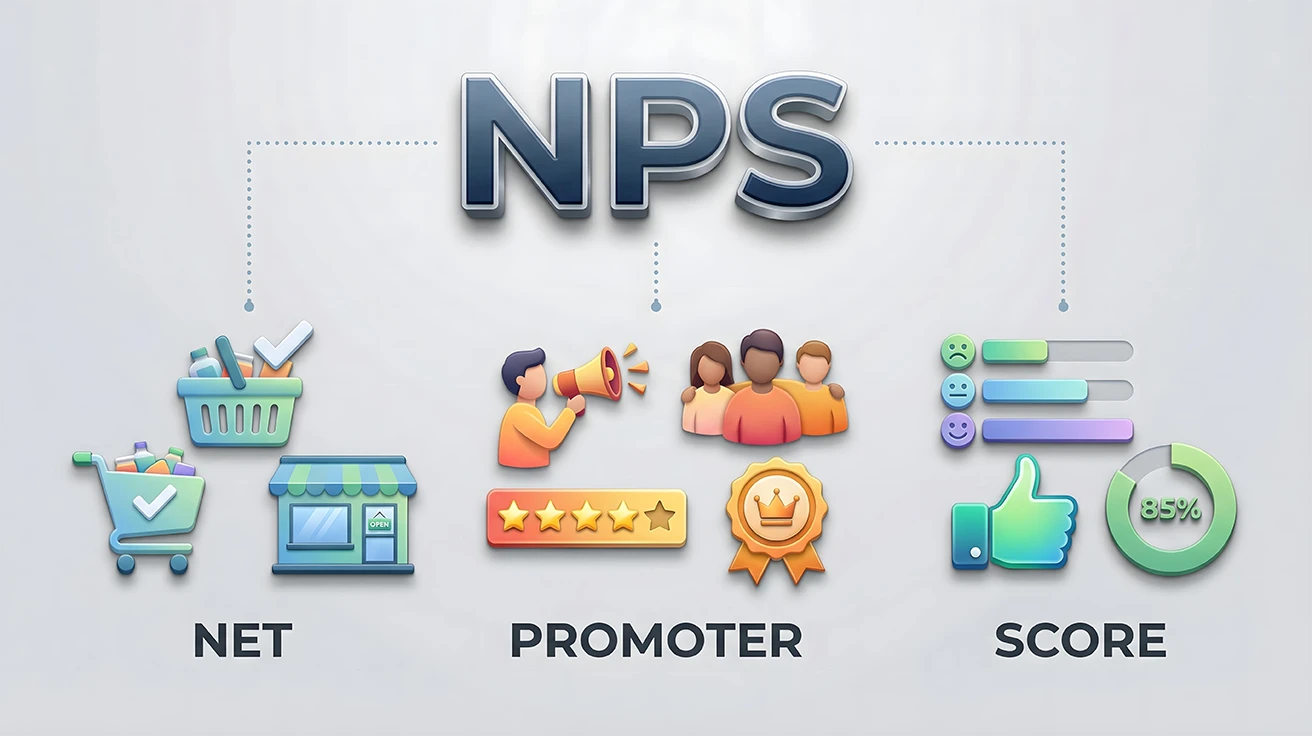
Net Promoter Score (NPS) measures customer loyalty using one key question: “How likely are you to recommend our company to others?” Customers respond on a 0–10 scale, where 9–10 are Promoters, 7–8 are Passives, and 0–6 are Detractors. The final score is calculated by subtracting the percentage of Detractors from the percentage of Promoters. Since it deals with recommendation behavior instead of the basic satisfaction, NPS surveys need to be designed and interpreted through professional market research services in order to provide relevant information.
How Experts Enhance NPS Accuracy?
Professional research associates introduce structure, procedure and analytical skills that convert raw responses into efficient business knowledge. Organizations gain evidence-based insights that support confident decision-making rather than speculation.
Here we are discussing the process of professional researchers enhancing the accuracy of NPS surveys and using the insights to make actionable plans to aid in making smarter business decisions.
Understanding the Real Purpose Behind Customer Loyalty Scores
Many companies treat surveys as a formality: send questions, collect answers and calculate a score. But loyalty measurement requires deeper thinking.
NPS quantifies customer loyalty and identifies the experiences that are leading to advocacy. It is directly related to business growth unlike the general satisfaction surveys. In a competitive market, NPS should be aligned to business objectives so that insights could be turned into operational strategies.
A professional market research company begins by aligning survey objectives with business goals. They ask essential questions:
- What decisions will this survey support?
- Which customer groups matter most?
- What behaviors should be measured beyond satisfaction?
The initial planning stage prevents major errors by ensuring organizations collect information that directly supports decision-making.
Designing Questions That Customers Actually Understand
Survey accuracy depends heavily on wording. Small changes in wording can significantly alter meaning for respondents who read the questions.
Experienced researchers refine language using proven frameworks and real consumer behavior insights. They use structured methods for customer feedback analysis and establish testing questions as follows:
- Neutral and unbiased
- Easy to understand
- Relevant to the customer journey
- Short enough to maintain engagement
When customers clearly understand questions, responses become more honest and consistent.
Choosing the Right Audience Instead of the Largest Audience
More responses do not always mean better insights. Poor sampling creates distorted results.
Research teams use quantitative methods for their participant selection process. They divide the audience into different segments according to three criteria which include their buying patterns, the ways of engaging with products and their current stage in the customer journey.
The survey system uses verified customer data to generate results that accurately reflect real behavior. The process of accurate sampling creates the main distinction which separates internal surveys from external surveys that professional organizations conduct.
Optimizing NPS Survey Timing to Capture Accurate Customer Loyalty Signals
Timing influences customer emotion. The reliability of survey results decreases when surveys get sent out either too early or too late.
A skilled research team studies customer touchpoints and determines when feedback is most meaningful.
For example:
- After service resolution
- Following product delivery
- At renewal or repeat purchase stages
Organizations use structured market research services to collect customer feedback which enables them to achieve more precise assessment results.
Eliminating Bias Before It Enters the Data
Bias can appear in many forms as leading questions, selective distribution, or incomplete datasets.
The researchers working professionally use the world-known frameworks of quantitative research and ethical survey procedures to maintain data accuracy, respondent confidentiality, and methodological transparency.
Many market research agencies in UAE use techniques such as:
- Response consistency monitoring
- Duplicate filtering
- Demographic balancing
- Survey logic testing
These safeguards protect data quality and prevent misleading conclusions. Compliance with data protection standards and ethical survey practices aligned with international market research regulations ensures responsible data handling and respondent confidentiality.
Statistical Validation Techniques That Strengthen NPS Survey Accuracy
Professional researchers apply statistical validation techniques to ensure NPS results are reliable and decision-ready. The researchers use advanced quantitative methods to assess sample confidence, margin of error, response distribution and statistical significance in order to verify that the Promoter and Passive and Detractor data correctly represent customer loyalty.
The checks provide leadership with assurance that NPS insights which they use to make decisions about retention strategies and service improvements have been supported by trustworthy evidence instead of assumptions.
Turning Numbers into Meaningful Customer Stories
A score alone does not explain the reason why customers feel a certain way. NPS analysis links Promoter, Passive, and Detractor ratings with open-ended comments and behavioral patterns to reveal actionable insights.
Common themes arise which include service delays, communication gaps, pricing perceptions, and product usability issues. Businesses can transform raw NPS data into strategic initiatives that boost loyalty, reduce churn, and enhance customer experience through structured pattern analysis.
Benchmarking Performance Against Competitors
Understanding internal performance is helpful, but understanding market position is powerful.
Professional firms conduct competitive benchmarking to compare results with industry standards and competitors. Benchmark comparisons may draw upon structured industry benchmarking frameworks and aggregated market data commonly used in professional research environments.
This allows businesses to answer critical questions:
- Are customer expectations rising?
- Is loyalty improving faster than competitors?
- Which areas create differentiation?
Benchmarking establishes a strategic framework which internal surveys do not provide.
Using Local Expertise to Interpret Cultural Nuances
Customer expectations differ between regions based on language and cultural factors. Market satisfaction indicators differ because customers show different reactions to various signals across different markets.
Local market research experts help local markets create surveys which match regional communication patterns and customer behavior. The team adjusts tone and examples together with response scales to create local expected standards which lead to better response accuracy.
Local understanding is particularly important in diverse business environments where customer backgrounds differ widely.
Structuring Reports That Decision-Makers Can Actually Use
Many organizations receive survey reports filled with charts but lacking direction.
Professional teams provide structured research reporting services designed for business leaders, not analysts. Reports typically include:
- Key insight summaries
- Priority improvement areas
- Customer driver analysis
- Practical recommendations
Clear reporting bridges the gap between data collection and real operational change.
Connecting Survey Insights to Business Strategy
An accurate survey becomes valuable only when linked to action.
A professional market research consultancy helps organizations integrate insights into departments such as marketing, operations, and customer service. They translate findings into measurable initiatives like:
- Service training programs
- Customer journey improvements
- Retention strategies
- Experience redesign
This alignment ensures survey results influence real business outcomes.
Continuous Improvement Through Long-Term Measurement
One survey provides only a snapshot of customer loyalty. Businesses that use market research services can track NPS changes through different time periods to observe how customer loyalty develops from Promoters to Passives and Detractors. The continuous measurement process enables organizations to evaluate their improvement outcomes while detecting new problems and discovering patterns that require multiple surveys for detection. Consistently measuring NPS strengthens accuracy, informs long-term planning, and ensures strategies are effectively improving customer advocacy and retention.
Why Internal Surveys Often Miss Critical Insights
Internal teams understand their business well, but they may unintentionally influence responses.
External specialists from market research agencies in UAE provide neutrality. Customers often share more honest opinions when surveys come from independent researchers rather than the brand itself.
This independence increases transparency and improves response credibility.
The Strategic Business Value of Professionally Managed NPS Surveys
At its best, NPS surveys in UAE become more than a customer scorecard. They evolve into a decision-making system powered by structured research, unbiased data collection, and expert interpretation.
When businesses rely on professional research support, they gain:
- Clearer customer understanding
- Reliable performance tracking
- Actionable improvement priorities
- Stronger competitive positioning
Accuracy leads directly to better strategy.
Conclusion: Turning Customer Feedback into Business Confidence
Customer loyalty cannot be improved through guesswork. Accurate measurement requires planning and execution based on expert knowledge and disciplined work methods.
Professional researchers refine survey design, select the right audience, remove bias, and interpret feedback within real market context. Organizations achieve advanced customer intelligence through the use of competitive benchmarking, structured research reporting services and expert analysis.
When managed professionally, surveys stop being routine exercises and become powerful tools that guide growth, strengthen relationships, and support confident decision-making across the business.
Frequently Asked Questions (FAQs):
How does an NPS survey help improve customer experience?
The research shows customer preferences and customer dissatisfaction. Businesses use actual customer feedback to solve their problems and improve their services.
Why is professional help important when running a customer survey?
Experts design better questions, choose the right audience, and analyse answers properly so the results are accurate and useful.
Can small businesses benefit from NPS surveys?
Yes. Even small businesses can use NPS surveys to understand customer expectations, identify loyalty gaps, and improve services without requiring large budgets.
Tags
#NPS surveys in UAEShare
Related Posts
February 23, 2026
Why Voice Data Collection for ASR Matters in Modern Research
How Voice Data Collection for ASR Supports Smarter Research Outcomes Voice data collection for ASR…
February 10, 2026
Patient Insights and Market Research UAE: How Data Shapes the Future of Healthcare
Patient insights and market research UAE and Their Role in Predicting Healthcare Trends Patient insights…
February 2, 2026
Healthcare Consumer Insights UAE: How Research Helps Improve Patient Retention
Healthcare consumer insights UAE has become an essential part of how hospitals and clinics in…
January 26, 2026
How Market Research Companies Design Patient Satisfaction Surveys in the UAE
Patient satisfaction surveys play a critical role in helping healthcare providers understand how patients truly…