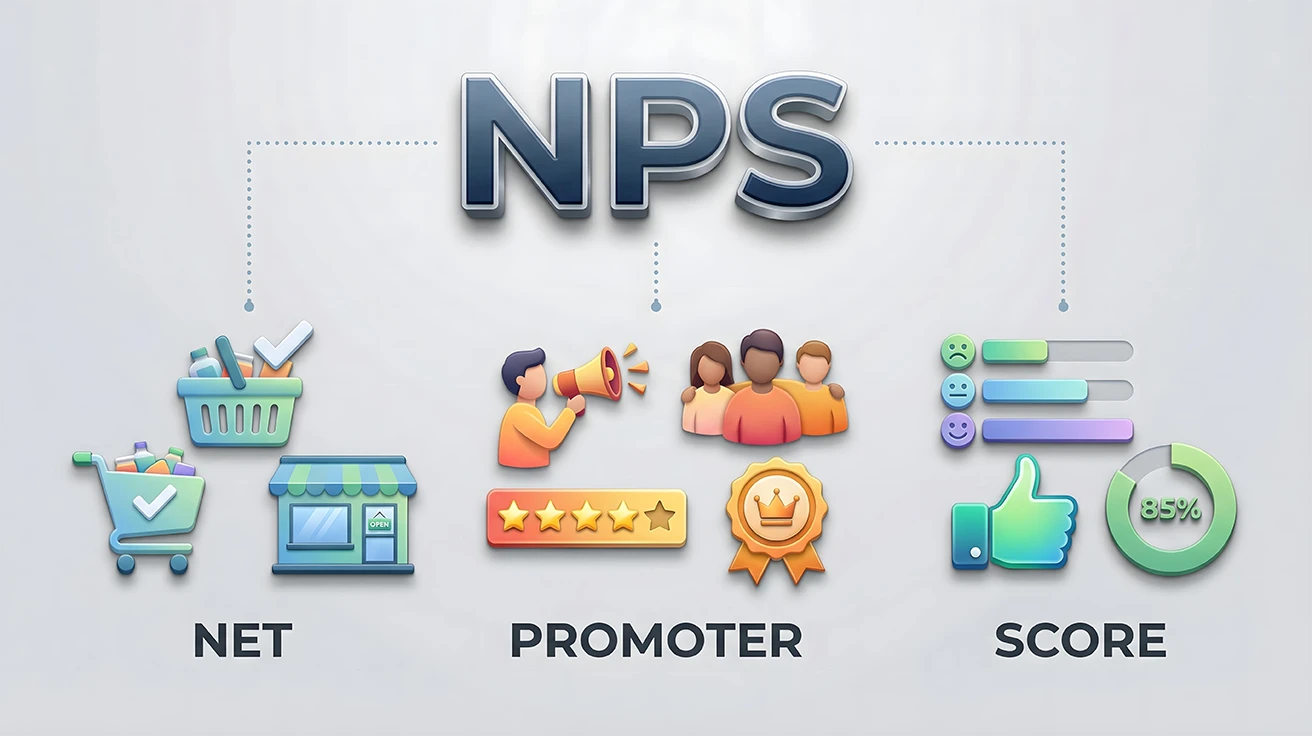
NPS survey best practices help businesses turn customer feedback into decisions rather than simply collecting another number. A survey can tell you how likely customers are to recommend your business, but the score alone does not explain what is driving their opinion.
Many businesses collect a strong volume of feedback but struggle to use it effectively. A low score may come from slow support, a product issue, poor communication, pricing concerns, or one frustrating experience. Without the right follow-up, these details can remain hidden.
A useful Net Promoter Score survey should therefore do more than measure loyalty. It should help teams understand what customers like, where they face problems, and what needs attention first. Good survey design, timing, segmentation and follow-up can make that difference.
NPS Survey Best Practices for More Useful Customer Feedback
The main NPS question gives you a score. The follow-up question provides the reason behind it. This is where the survey can become much more valuable.
One of the typical errors in writing a question is asking a very general one like, “Why did you give that rating?” The client is able to answer it, but the answers can be so general to guide action. There are also some other specific questions that may help get valuable information from your clients.
Some of them include:
- What’s the main reason behind the score?
- How could we improve your experience?
- What worked particularly well for you?
- What would make you more willing to recommend us?
When writing an open-ended question, it should be rather easy. Do not lead your clients either towards the positive or the negative answer. The goal is to let them describe the experience in their own words.
A proper follow-up will also help you determine if the problem is with the product, service, people, process, or client experience.
When to Send an NPS Survey to Get More Meaningful Responses
Timing has a direct effect on feedback quality. Sending a survey too early may mean the customer has not experienced the full service. Sending it too late can make details harder to remember.
The right timing depends on the customer journey and the question being asked.
After purchase: Useful for understanding the buying and checkout experience.
After delivery: Better when customers need to receive and use the product before forming an opinion.
After customer support: Captures responses while the customer experience remains recent.
At regular intervals: Can help evaluate general loyalty and changes in sentiment.
It is important to make sure not to overdo it by sending surveys too often. Overloaded customers will simply stop responding. A clear contact strategy protects both response quality and customer goodwill.
Why NPS Responses Should Be Segmented Before Analysis
An overall result can hide important differences between customer groups. Segmentation solves this by grouping responses according to characteristics that matter to the business.
For example, companies may compare customers by:
- New versus long-term customers
- Product or service type
- Customer value or account size
- Region
- Sales channel
- Customer type
- Subscription or service plan
This grouping step can reveal patterns that disappear when every response is combined into one figure.
Imagine an organisation with a healthy overall NPS score, but new customers are consistently less satisfied than established customers. That finding could point to problems with onboarding, product education or early support.
The value of segmentation is not simply having more categories. It is knowing which differences can help explain customer behaviour and guide a business decision.
How NPS Scores and Customer Comments Reveal Deeper Insights
Segmentation tells you who is responding differently. Combining the score with comments helps explain why.
Suppose a group gives low scores and repeatedly mentions delayed responses from customer support. The number shows there is a problem. The comments help identify its likely cause.
This is where customer feedback analysis becomes important. Numerical results and written feedback should be reviewed together instead of being treated as separate datasets.
Look for repeated themes such as:
- Delivery or fulfilment problems
- Product usability concerns
- Support delays
- Pricing complaints
- Positive employee interactions
- Requests for new features
- Communication gaps
Comments should not automatically be treated as facts about the entire customer base. They are signals that need to be reviewed alongside response volume, customer groups and other business information.
How to Close the Feedback Loop With Detractors and Passives
Collecting feedback without responding to it can frustrate customers. People are more likely to value a survey when they feel their concerns have somewhere to go.
Detractors may need a timely response, particularly when their feedback points to a service failure that can still be corrected. Passives also deserve attention. They may not have had a poor experience, but they have not found enough value to become strong advocates.
A practical follow-up process can include:
- Review the customer’s feedback.
- Decide whether personal contact is appropriate.
- Assign the issue to the right team.
- Set a clear response timeframe.
- Record the action taken.
- Check whether the issue has been resolved.
The person following up should also have enough authority to help. Sending every complaint through several layers can make the process slow and frustrating.
Turning NPS Findings Into Actionable Recommendations
Customer feedback becomes useful when it reaches the people who can change something.
A product team may need to investigate a recurring feature complaint. A support team may need to improve response times. Operations may need to review delivery problems. Senior management may need to look at a wider issue affecting several customer groups.
Create clear internal routes for survey findings:
- Product: Features, usability and product concerns
- Customer support: Service quality and response issues
- Operations: Delivery and process problems
- Sales: Expectations and buying experience
- Leadership: Major trends and business-wide concerns
Not every comment requires a major project. Prioritise issues based on frequency, customer impact, business importance and the effort needed to resolve them.
This keeps customer feedback connected to practical decisions rather than leaving it in a monthly presentation.
Why Tracking NPS Trends Matters More Than Looking at a Single Score
One survey gives you a snapshot. Regular measurement shows direction.
A single result may be affected by a recent event, seasonal demand or a particular customer group. Looking at results over time provides more useful context.
Businesses can compare changes alongside:
- Product launches
- Pricing updates
- Service changes
- New support processes
- Marketing campaigns
- Delivery improvements
- Major customer experience initiatives
A falling result does not automatically prove that one specific change caused the decline. However, it gives the business a reason to investigate.
The best NPS surveys create a consistent measurement process so that changes can be compared fairly over time.
Common Mistakes That Make NPS Feedback Difficult to Act On
Even a well-known survey method can produce weak results when the execution is poor.
Use this checklist to identify common problems:
- Sending surveys too often
- Using unclear or leading questions
- Asking too many questions
- Ignoring customer segments
- Focusing only on the headline score
- Collecting comments without analysing them
- Failing to assign responsibility for follow-up
- Comparing results from different survey designs
- Taking action based on a very small response group
- Never checking whether corrective actions worked
The survey should fit naturally into the customer journey. It should also have a clear purpose before it is launched.
Choosing the Right Support for an Effective NPS Programme
The tools and process should match the size and complexity of the research. Small customer programmes may need only a simple survey platform and clear reporting process. Larger programmes may require structured sampling, data analysis and ongoing measurement.
There are several NPS survey tools that businesses can choose from based on their survey size, reporting requirements and internal resources.
For larger or more complex projects, NPS survey services can support questionnaire design, data collection, analysis and reporting. Businesses looking for external research support may also compare NPS survey companies in UAE based on their methodology, sector experience and reporting approach.
The key is to choose an approach that supports the decision you need to make. Technology alone does not make customer feedback actionable.
Conclusion: From NPS Feedback to Practical Customer Experience Improvements
NPS survey best practices are ultimately about making customer feedback easier to understand and easier to use. A score is only the starting point.
Ask clear follow-up questions. Choose a suitable survey moment. Group responses carefully. Connect scores with comments. Give teams responsibility for follow-up, and monitor whether changes improve the customer experience.
Businesses can also combine NPS with wider market research services when they need to explore customer needs, expectations and behaviour in greater depth. This can provide useful context around the reasons behind changing loyalty levels.
A strong feedback programme should answer four simple questions: What are customers experiencing? Why do they feel this way? Which issues matter most? What should the business do next?
When those answers are clear, customer feedback becomes more than a measurement exercise. It becomes a practical input for improving products, service delivery and long-term customer relationships.
Need clearer insight into customer satisfaction and loyalty? Think Positive can support your NPS research from survey design through to actionable findings.