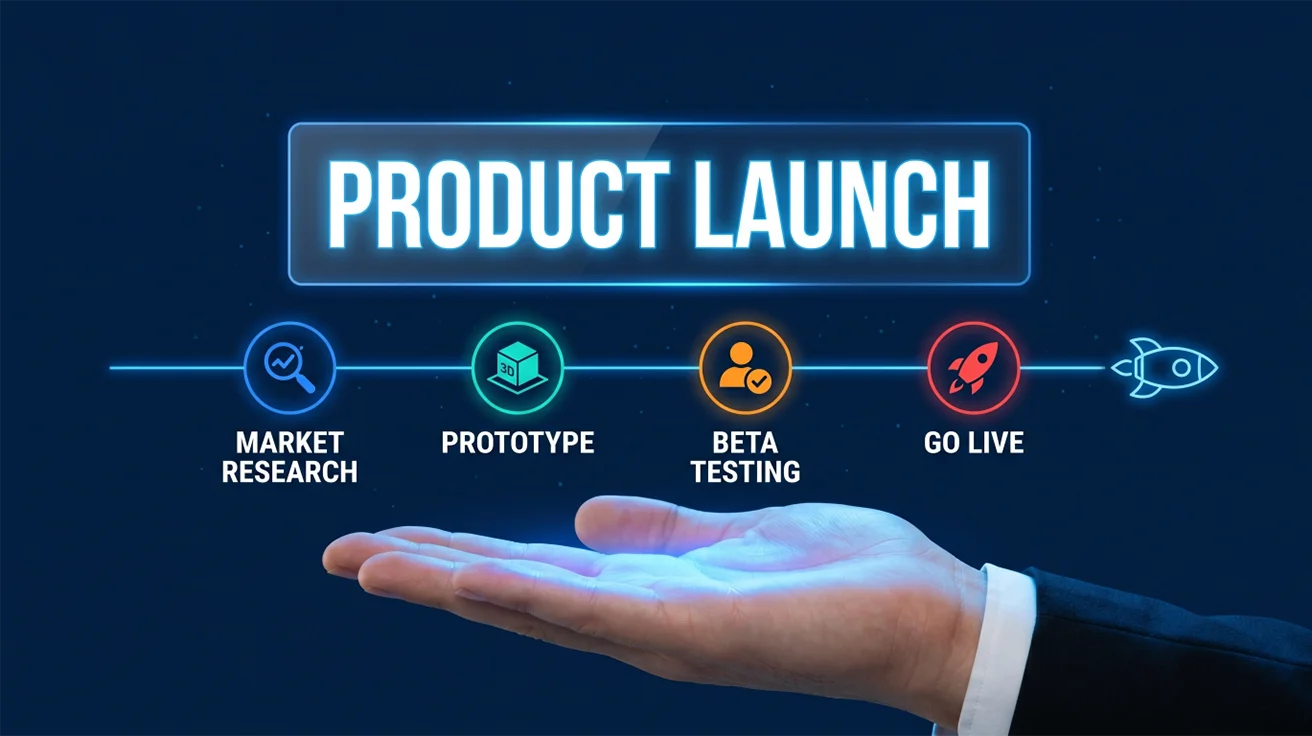
Product testing in market research helps businesses compare different versions of a product before deciding which one to launch. Two formulas may perform well during internal testing, or several packaging options may appeal to the development team. However, internal opinions do not always reflect customer preferences.

By gathering feedback from relevant customers, businesses can identify which version people prefer, what influences their choices and whether the preferred option meets their commercial goals.

When Businesses End Up With More Than One Product Version

Businesses may develop several product versions before reaching a final decision. Each option can have different strengths, making it difficult to choose without customer feedback.

Common situations include:

    • Different recipes or formulas: A food company may compare several flavours, while a skincare brand tests formulas with different ingredients.
    • Packaging or size options: A business may compare package designs, materials or sizes to understand which best suits its target customers.
    • A new versus an existing product: A company may test an improved version against its current product to see how customers respond to the changes.
    • Prototype options from different suppliers: A manufacturer may compare technically viable samples from different suppliers to identify differences that customers may notice and respond to differently. 

In these situations, customer feedback helps businesses compare the available options before committing to production 

Why Internal Opinions Aren’t Enough to Choose a Version

Teams that have worked on a product for months are not in the same position as someone encountering it for the first time. A few specific issues come up regularly:

  • Familiarity affects perception: People who’ve tasted, handled, or used a product repeatedly stop noticing things that a new customer would notice immediately. Texture that’s slightly off, a scent that lingers a little longer than it should, a packaging element that takes a second too long to figure out.
  • Internal preferences can skew decisions: Preferences within a development or marketing team don’t always align with the preferences of the target customer group. The version that the team finds more interesting isn’t necessarily the one customers will buy again.
  • Customers catch different things: A participant who’s never seen either version before brings a perspective that’s genuinely different from anyone involved in creating it. That outsider view is exactly what consumer product testing is designed to capture.

How Product Testing in Market Research Helps Compare Different Versions 

The method used affects what you can conclude from the results. Product comparison testing generally takes one of a few forms:

  • Side-by-side testing: Participants evaluate both versions at the same time. This works well when the differences between versions are subtle and you want to see which is clearly preferred when directly compared.
  • One-at-a-time testing (monadic): Each participant evaluates only one version. This more closely mirrors a real purchase decision and is better for measuring purchase intention because participants aren’t primed by the alternative.
  • Blind versus branded testing: Removing branding from the test reveals whether preference is driven by the product itself or by existing brand associations. Branded testing shows how the product performs in its real commercial context. Running both can be revealing when the results differ.

Choosing the right method depends on what the decision actually requires. Testing a reformulation of an established product is different from comparing two entirely new options.

What to Measure When Comparing Product Versions

New product development research that focuses only on overall preference often misses information that would have changed the decision. More useful evaluation covers:

  • Overall liking and preference: Which version do participants prefer, and how strong is that preference?
  • Specific product attributes: For food and beverage, this includes taste, texture, and aftertaste. For personal care, it might be scent, absorption, or feel. For a physical product, ease of use and perceived quality matter.
  • Purchase intention: Would the participant actually buy this? At what price? This separates genuine commercial appeal from polite interest.
  • Reasons behind preferences: Knowing that Version A was preferred is useful. Knowing it was preferred because of a specific attribute, or despite a specific concern, is considerably more useful for the product development and marketing teams.

Who Should Test Your Product Versions?

The participant group needs to match the intended customer. Testing a product with the wrong audience produces results that don’t transfer to the real market.

Recruit participants who match the target customer profile. Age, gender, purchase behaviour, and relevant lifestyle factors all matter depending on the product category.

Include existing users when testing changes to an established product. Their reaction to a reformulation is often different from new users encountering the product for the first time. Both perspectives are relevant, but they may point in different directions.

Consider sample size and participant mix carefully. A sample that’s too small or too homogeneous produces findings that look decisive but aren’t reliable. Product testing services designed properly account for this from the start.

How to Interpret Results When Comparing Product Versions

A clear winner in the data doesn’t always mean the decision is straightforward.

Identify the leading version based on the results. Which version scored higher on preference, purchase intention, and the key product attributes?

Determine whether the difference is meaningful. A version that scores marginally higher might not represent a reliable market advantage. Look at whether the gap is consistent across different participant groups or concentrated in one segment.

Consider the strength and consistency of the findings. If preference is strong and consistent, the decision is easier. If it’s mixed or segment-dependent, the result needs more interpretation before a confident launch decision can be made.

What If Different Customer Groups Prefer Different Versions?

This is a real situation that product testing sometimes reveals. A new version performs better with first-time buyers but existing loyal customers prefer the original.

Understand why the disagreement exists before deciding anything. Is it familiarity? A specific attribute that matters more to one group? Or a genuine product performance difference that the two groups weigh differently?

Determine whether one version can satisfy both groups. Often it can, with the right product positioning or a minor adjustment. Sometimes it genuinely can’t.

Consider whether separate versions are commercially justified. This is a business decision as much as a research decision. Product testing in UAE and regional markets sometimes reveals segment differences that are large enough to support separate versions, but that needs to be weighed against the cost and complexity of running them.


Businessperson interacting with a digital product test interface with technology and analytics icons.

How to Choose a Product Version That Meets Business Goals

Customer preference is one input. It’s not the only one.

Compare customer preference with production costs and profit margins. The most preferred version might also be the most expensive to produce. If the margin doesn’t work at the intended price point, that matters.

Assess whether the preferred version fits the intended selling price. A product that customers prefer but won’t pay the required price for doesn’t solve the launch decision problem.

Consider manufacturing capacity and brand positioning. Can the preferred version be produced at the required scale? Does it fit where the brand sits in the market?

Balance customer demand with commercial feasibility. The right launch version is the one that customers genuinely prefer and that the business can deliver profitably.

What to Do When Product Testing Results Are Inconclusive

Sometimes the results don’t produce a clear answer. The scores are close, the reasons are mixed, and the data doesn’t point decisively in one direction.

When that happens, identify what’s preventing clarity. Are the versions too similar to produce a meaningful difference? Was the test design capturing the right attributes? Was the participant group appropriate?

Refine the product differences, adjust the test design, or run another round with a larger or different sample. A limited trial launch is also an option when testing results are genuinely balanced and the risk of a full launch is manageable.

A Practical Example of Choosing Between Two Product Versions

A hypothetical food brand is choosing between two versions of a packaged snack. Version A uses a slightly saltier flavour profile. Version B uses a milder formulation that the development team prefers internally.

In a hypothetical monadic test involving participants who match the target buyer profile, Version A scores higher on overall preference and purchase intention. Open-ended feedback shows participants describe it as more satisfying. Version B scores marginally better on the “would eat repeatedly” question, suggesting it might perform better for regular buyers over time.

The business also checks production costs. Both versions cost the same to produce. Version A is chosen for launch based on stronger first-purchase intent, with Version B flagged for consideration in a reformulation review after the product establishes itself in the market.

This is a hypothetical example for illustration purposes only.

Mistakes to Avoid When Choosing a Product Version

Testing versions without meaningful differences produces results that can’t guide a decision because participants can’t reliably distinguish between them.

Using an unsuitable participant group means the findings don’t transfer to the actual customer. This is one of the most common sources of misleading product test results.

Treating initial interest as proof of purchase intention. People often express more enthusiasm in a test environment than they would at a shelf with a price tag attached. Purchase intention questions need to be realistic to be useful.

Ignoring feedback that contradicts the preferred version. If a significant minority raises the same concern about the leading version, that concern deserves examination rather than dismissal.

Choosing a winner based on one measure. A version that scores highest on preference but low on purchase intention or perceived value hasn’t necessarily won the launch decision.

How a Market Research Company Supports Product Version Testing

A market research consultancy that conducts product testing can bring structure and objectivity to decisions that might otherwise be influenced by internal assumptions. A research company typically supports product version testing by:

  • Recruiting participants who genuinely match the target customer profile
  • Designing tests that produce comparable, reliable results across versions
  • Analysing results by customer group, not just overall
  • Connecting preference findings with commercial objectives
  • Presenting recommendations that the business can act on

A market research company in UAE with relevant product testing experience can help businesses recruit suitable local participants and understand customer preferences in the UAE market. 

Conclusion: Making the Right Product Launch Decision

Product testing in market research that compares versions properly, with the right participants, the right method, and the right measures, gives businesses something more reliable than internal judgment. The goal isn’t just to find which version scores highest. It’s to understand why, who prefers it, and whether that preference translates into purchase behaviour. Combined with a realistic look at commercial factors, that’s what a confident launch decision actually rests on.

For businesses looking to choose the right product version, Think Positive conducts structured product testing to understand customer preferences and identify areas for improvement. Contact us to evaluate your product options before launch.

Frequently Asked Questions (FAQs):

What is product testing in market research?

It involves asking potential customers to try and evaluate a product before launch. Businesses use their feedback to improve products and choose the best version.

Companies ask selected customers to evaluate different versions based on features, quality, overall liking and purchase intention.

A market research agency recruits suitable participants, manages product evaluations and analyses feedback to help businesses make informed launch decisions.

Related Posts