A voice data collection company builds the speech datasets that Automatic Speech Recognition (ASR) systems learn from, and for multilingual projects that means gathering samples in every language the system must understand. The work involves finding the right speakers, recording them properly and covering each language accurately enough to reflect how people really talk across different regions. Done well, the result is a dataset that matches real-life speech instead of an idealised version of it.

Why Multilingual ASR Projects Are More Complex Than Single-Language Projects

Building ASR for one language is a contained task. Adding more languages changes it. Each language has its own sounds, pronunciation rules, sentence structure and speaking rhythm, and some use entirely different scripts, which affects how speech is transcribed and labelled.

Speech data is also unevenly available. Widely spoken languages usually have large pools of speakers to draw from. Smaller languages are harder to cover, and regional accents or local vocabulary make the picture more complicated still.

There is a consistency problem too. Requirements need to stay the same across every language group. Imagine one language delivered with clear recordings from a broad mix of speakers, while another arrives with only a handful of uneven samples. The dataset would fall short of its goals, even if the first language looked excellent.

Skilled voice data collection companies manage these issues using a clear plan. They planned recruitment, organised recording sessions and quality checks done language by language.

Defining Project Scope Across Languages

Every solid ASR project begins with a plan. Before any recording starts, the research team and the collection partner should agree on what the dataset must include. They should also align on what the dataset will be used for. 

The planning step should cover these points: 

  • Languages and dialects. 

Which languages, regional variations and accents must the system recognise?

  • Speaker profiles. 

What age groups, gender balance, locations and levels of language fluency are required?

  • Sample volume.

 How many participants, recordings and hours of speech does each language need?

  • Recording format. 

What audio format, recording length and file naming rules apply, and is transcription part of the job?

  • Intended use.

 Will the data support a voice assistant, a customer service tool, voice search or something else?

These answers prevent gaps later. A system built for customer service calls will need short requests, questions, numbers and business terms. A voice assistant needs a wider range of commands and everyday phrases. In multilingual voice data collection, this early planning also shows which languages will take longer to staff and which can start recording straight away. 

Sourcing Native Speakers for Each Language

A speech dataset is only as good as the people who contribute to it. Speakers need to match the language requirements, and their voices should resemble those of the people the system will serve.

A customer research consultancy with solid recruitment capability can find participants through established databases, recruitment networks and other approved sources. Fluency alone is not enough to qualify someone, so selection should look at several factors:

  • Fluency: Can the participant speak the language naturally and comfortably?
  • Regional background: Do they come from the places where the end users live?
  • Age and gender: Is the mix appropriate for the research requirements?
  • Speaking style: Does the project need casual conversation, formal language or specialist vocabulary?
  • Availability: Can the required sample size be reached within the schedule?

Smaller language communities usually need more targeted outreach. Some speakers also use a regional dialect rather than the standard form of the language. Spotting these differences early lets the team recruit people who fit the brief, instead of filling quotas with speakers who do not.

Collecting Speech Samples in Real-World Conditions

Once speaker profiles are confirmed, recording can begin. The method depends on what the ASR system is meant to do.

Scripted speech suits projects that need specific vocabulary. Participants read set phrases, questions, commands or sentences, which gives the team control over coverage across speakers. Natural speech works better when the system must handle everyday conversation. Participants answer questions, describe their day or talk with another person, and the recordings capture pauses, shifts in speed and common expressions that scripts tend to miss. Good speech data collection for ASR starts with matching the method to the system’s purpose, and that choice can differ from one language to the next. 

A well-run collection process pays attention to a few practical points:

  • Devices: Mobile phones, headsets or other equipment that meets the project specification.
  • Environment: Indoor or outdoor settings chosen to match the research objective.
  • Background noise: Guidance on avoiding unwanted sound, unless realistic noise is part of the study.
  • Instructions: Plain directions on speaking distance, volume, pace and how to submit files.
  • Procedures: The same recording standards across languages, with room for genuine language-specific needs.

Reliable voice data collection services coordinate these activities and monitor submissions as they arrive. That way a recording problem shows up in the first week, not after recruitment has closed.

Handling Dialects, Accents and Code-Switching in ASR Data

Two people who share a language rarely speak it identically. Pronunciation, vocabulary and expressions shift with region, age and setting, and a dataset aimed at a broad audience may need to reflect that range.

Code-switching adds another layer. It happens when a speaker moves between languages within the same conversation. In the UAE and across the Gulf, for instance, someone may speak in Arabic but include English business terms such as “meeting”, “report” or “deadline”.

Whether this belongs in the dataset depends on the purpose. A system for formal Arabic transcription has different needs from a voice assistant used in a multilingual office.

The collection brief should therefore state:

  • Which regional accents and dialects must be represented.
  • Whether speakers should use standard language, everyday speech or both.
  • Whether mixed-language conversations are required.
  • How language switching should be handled in transcripts, where transcription is included.

With these points written down, the recruitment and collection teams know what to capture and do not have to treat every variation as a surprise.

 

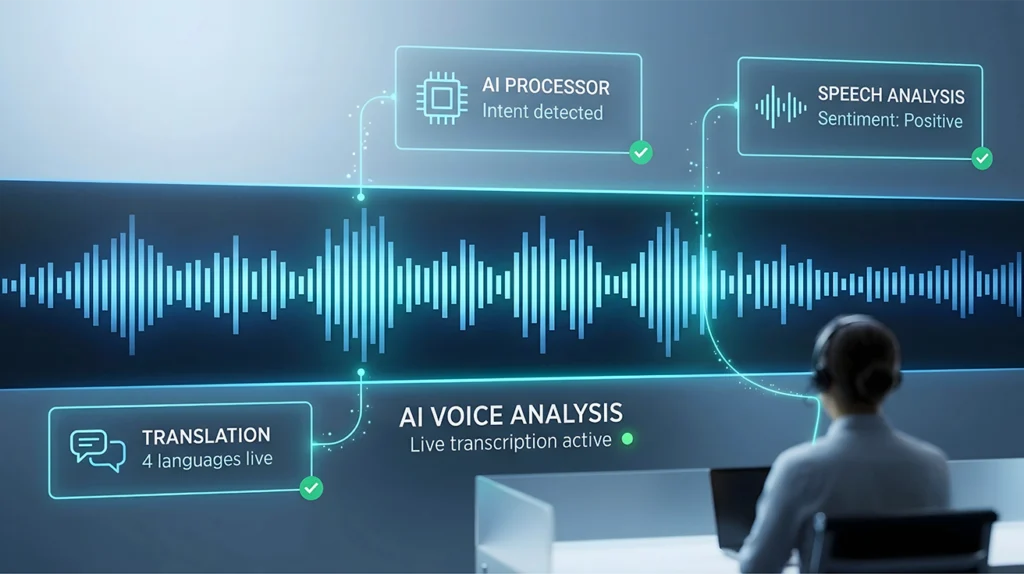
AI voice analysis system displaying speech waveforms, live transcription, sentiment analysis, and multilingual translation.

Maintaining Consistency in Multilingual Data Preparation

Recording the audio is only part of the job. The files also need to be organised under agreed rules so research teams can review and use them without confusion.

Multilingual ASR datasets often combine different writing systems, spelling conventions, number formats and name styles. These differences need careful handling whenever transcripts, labels or other text are included. A spoken number in Arabic, for example, might be written as numerals or as words depending on the transcription guidelines. A name converted from one script to another can have several accepted spellings.

To keep things consistent, the project team should:

  • Set transcription and spelling rules for each language.
  • Agree conventions for numbers, names, abbreviations and borrowed words.
  • Use uniform file names and participant identifiers.
  • Document how to record unclear speech, pauses and mixed-language phrases.
  • Keep a shared record of approved exceptions to the main instructions. 

The goal is not to force every language into identical writing rules. Each language follows its own documented standard, and all of them serve the same overall objectives.

Quality Checks for Each Language

A large volume of recordings does not make a dataset ready for ASR development. Every sample has to meet the agreed technical and language requirements.

Checks should run while collecting, then again after the files are submitted. Doing an early check helps because changes can be requested while recruitment is still running. This approach works best when the project timeline allows enough time for adjustments.

A practical quality process covers these areas:

  • Audio clarity. Heavy background noise, distortion, very low volume and unclear speech.
  • File completeness. Missing recordings, damaged files, unfinished responses and other technical faults.
  • Language verification. Each recording contains the required language or approved language mix.
  • Speaker match. Samples correspond to the agreed participant profiles.
  • Recording compliance. Participants followed the instructions and the required format.
  • Transcript accuracy. Where transcription is included, reviewers check spelling, punctuation, language switching and errors specific to that language.

These checks should be run separately for each language. A dataset can look healthy overall while hiding a gap in one dialect or one language group, and a language-level review is what exposes it.

For businesses investing in voice data collection for AI training, this approach cuts avoidable rework and helps ensure the delivered files match the specification.

Managing Consent and Privacy in Multilingual Data Collection

Speech recordings can contain identifiable voices, personal details and sometimes sensitive information. Participants should know what they are being asked to record before they agree to take part.

Consent information needs to be written in a language the participant understands. It should describe the purpose of the project, how the recordings will be used, how the data will be handled and any limits on its use.

The collection team should also have set procedures for:

  • Explaining the recording activity and obtaining the required consent.
  • Restricting access to audio files and participant information.
  • Separating identifying details from recordings where appropriate.
  • Moving and storing files through approved channels.
  • Answering participant questions and requests under the agreed project process.

Privacy and data-handling requirements differ between projects, parties and jurisdictions. Research teams should confirm what applies before collection starts and make sure the agreed procedures are followed throughout.

These steps give participants a clearer picture of how their contribution will be used, and they keep the collection process responsible.

How to Choose a Voice Data Collection Company for a Multilingual ASR Project

The choice of partner affects recruitment success, recording quality, delivery timelines and how useful the final dataset turns out to be. Judge each provider against your actual project requirements, not against general service claims.

When comparing options, look at these factors:

  • Language and regional coverage. Can the provider recruit suitable speakers for every language, dialect and location you need?
  • Recruitment capability. How are participants sourced, screened and matched to the agreed profiles?
  • Recording management. How are instructions, devices, submission steps and technical standards controlled?
  • Language-specific quality assurance. How are recordings and transcripts checked across language groups?
  • Capacity. Can they deliver the required number of speakers and recording hours by your deadline?
  • Privacy procedures. How will consent, participant information and audio files be managed?
  • Reporting. How will progress, recruitment gaps and quality problems be communicated during the project?

Businesses comparing market research companies in the UAE should also test how well each one understands their research objectives. Local market research services in UAE can also support recruitment by connecting teams with speakers from Arabic, Hindi, Urdu and other community groups. A partner with strong local recruitment knowledge can reach speakers across different communities, while a project covering several international languages may need a wider sourcing network.

Ask each provider to walk you through its proposed collection process, quality checks and delivery plan. Putting those details side by side makes it much easier to spot the partner that can meet your requirements without delays or extra work.

Request each provider to show you their recommended collection process, quality assurance and delivery plans. It can be easier to compare the partner plans side by side and see which partner will be able to provide the required details for your specific needs without any delay or additional effort.

Conclusion

Large amounts of audio alone are not enough for multilingual ASR projects. They rely on appropriate speakers, clear recording guidelines, and careful attention to both dialect and quality standards of each language. 

A good voice data collection company in UAE will be able to help research teams plan and recruit, record, ensure the quality of the data, and deliver the final product. The right partner will ensure the project’s language coverage, data volume, and timeline meet expectations, as well as the privacy requirements, and project standards will be clearly adhered to throughout the project. 

When developing a multilingual speech recognition system, having a suitable collection partner is an important factor in the collection of a dataset that represents real speech. 

Think Positive provides voice data collection services for AI training and multilingual speech recognition. Contact us to plan your next data collection project.

Frequently Asked Questions (FAQs):

What does a voice data collection company do?

A voice data collection company collects and organizes voice recordings for businesses to create and enhance automatic speech recognition (ASR) systems.

Voice data can be used to train ASR systems with various words, pronunciations, accents and speaking styles for better recognition.

Look for a company with suitable language coverage, recruitment team experience, quality checks and ability to meet your project deadlines.

  1. ASR Voice Data Collection Services: From Voice Recordings to Usable Training Data – Think Positive – Market Research Company in Dubai

    3 hours ago

    […] ASR voice data collection services deliver considerably more than a folder of audio recordings. The journey from raw recordings to structured training data involves transcription, segmentation, annotation, alignment, metadata creation, validation, and careful formatting that together determine whether the dataset can effectively support model development. […]

Post a comment

Your email address will not be published.

Related Posts